Auto-Drafting, Before and After: Why We Stopped Starting From the Data
If you've ever finished reading a drafting tool's output and felt like you were holding a stack of paragraphs instead of a report, you've already felt the problem this piece is about to name.
A vaste majority of ESG reporting tools — ours included, until recently — ask the wrong first question. They ask: what data do you have? Then they draft a paragraph about it. Then another, about the next data point. Section by section, disclosure by disclosure, each one written in isolation from the one before it.
The right question is different: what report are you building?
It sounds like a small distinction. It isn't. A report isn't a pile of approved facts, it's a structure, with a logic that runs from chapter to chapter. A sustainability expert or consultant doesn't sit down and think "I have forty disclosures, what can I say about each one." They think "I have a nine-chapter report due, and I need every section to read like it belongs to the same document." Tools that start from the data skip that thinking entirely. They hand back content that's accurate, sentence by sentence, and disconnected, chapter by chapter.
We built that tool. Then we rebuilt it.
The earlier version of Squarely's Auto Drafting did exactly what's described above. It pulled directly from approved disclosures and generated narrative per data point. It had been live for over a year.
When we asked our consultants why the feature wasn't more used, the answer wasn't that the AI wrote badly, it was that the tool was too literal. It would only say what a disclosure said, with no room to infer, introduce, or connect one section to the next. The output was correct and forgettable: every paragraph sounded like it had been written by the same process, because it had been. There was no sense of a report taking shape, only a sequence of facts being restated in sentence form.
The fix wasn't a better prompt or a smarter model, it was a different starting point.
Starting from the report, not the data.
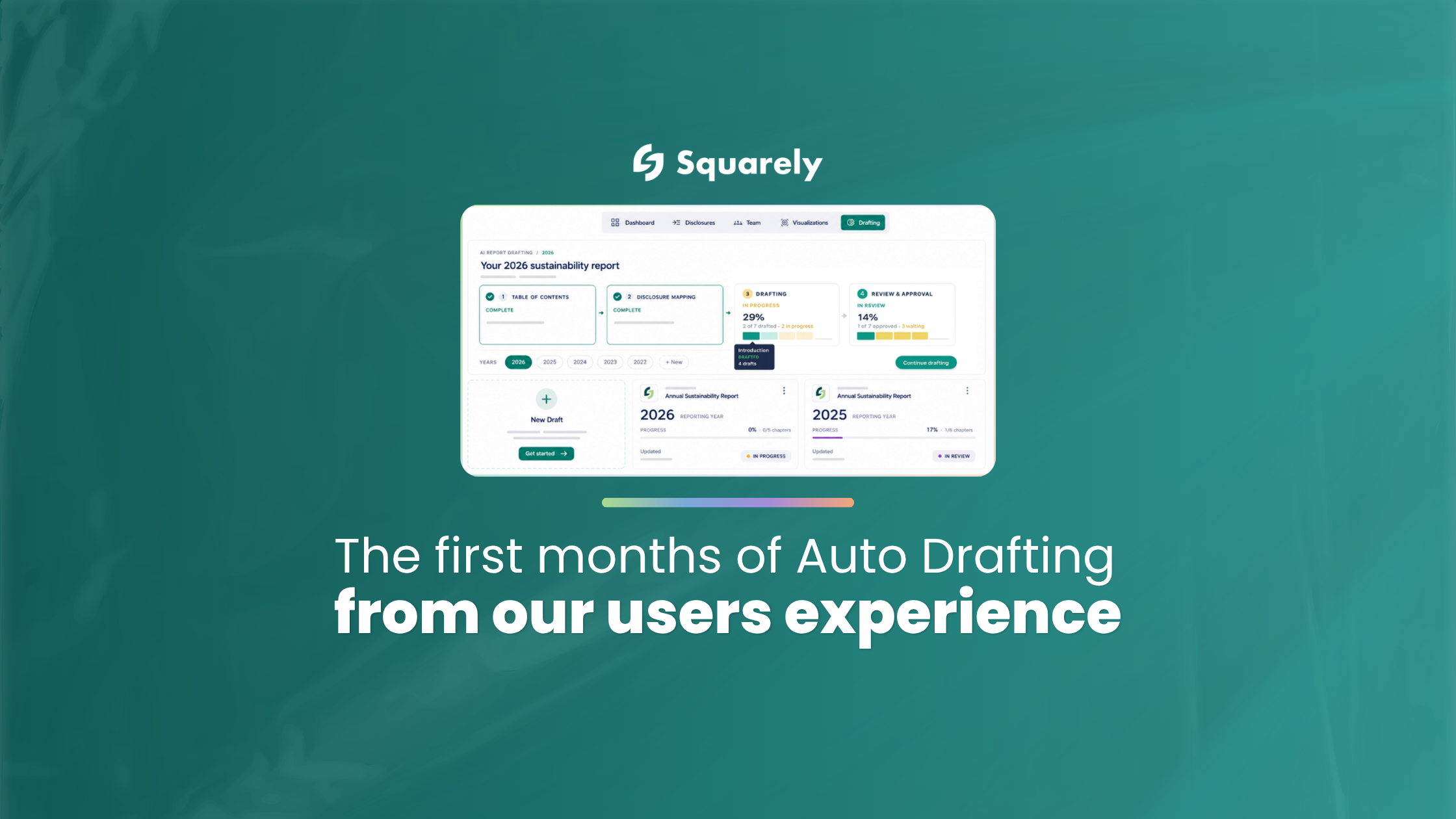
Squarely’s Auto-Drafting module now begins with your table of contents, not your dataset. You set the structure first: the chapters, the sections, the shape of the report you actually intend to publish. From there, approved disclosures get mapped into the sections they belong to. Only then does drafting begin, chapter by chapter, with the AI writing toward the section it's been asked to fill rather than toward an isolated fact.
That sequencing matters more than it sounds like it should. A section about water usage written in service of a "Resource Management" chapter reads differently than the same disclosure drafted with no awareness of what comes before or after it. The structure gives the narrative somewhere to go.
It also turned out the structure needed room to move. Locking a table of contents too early created its own friction. What if a chapter needs to split, or a section needs to be added once you're deeper into drafting and can see what the data actually supports? So the structure stays editable even after you've started: you can still add or remove chapters and sections mid-draft, not just at setup. Most tools fix the skeleton once it's set. This one doesn't have to be right on the first try.
What didn't change
The draft is still a first draft. It still goes through your review, section by section, before anything is considered final. It's still grounded entirely in disclosures your team has approved — not invented, not pulled from outside sources, not generated from a prompt with no connection to your actual data. A single section can draft in minutes. A fully reviewed, approved report still takes days, because review is supposed to take time.
What changed is the order things happen in. From approved data to a structured first draft in days, starting from the report, not the data. That's the whole shift, and it's the one that mattered.
Auto-Drafting is part of Squarely's reporting workflow, built for sustainability teams and consultants across the GCC and MENA region.