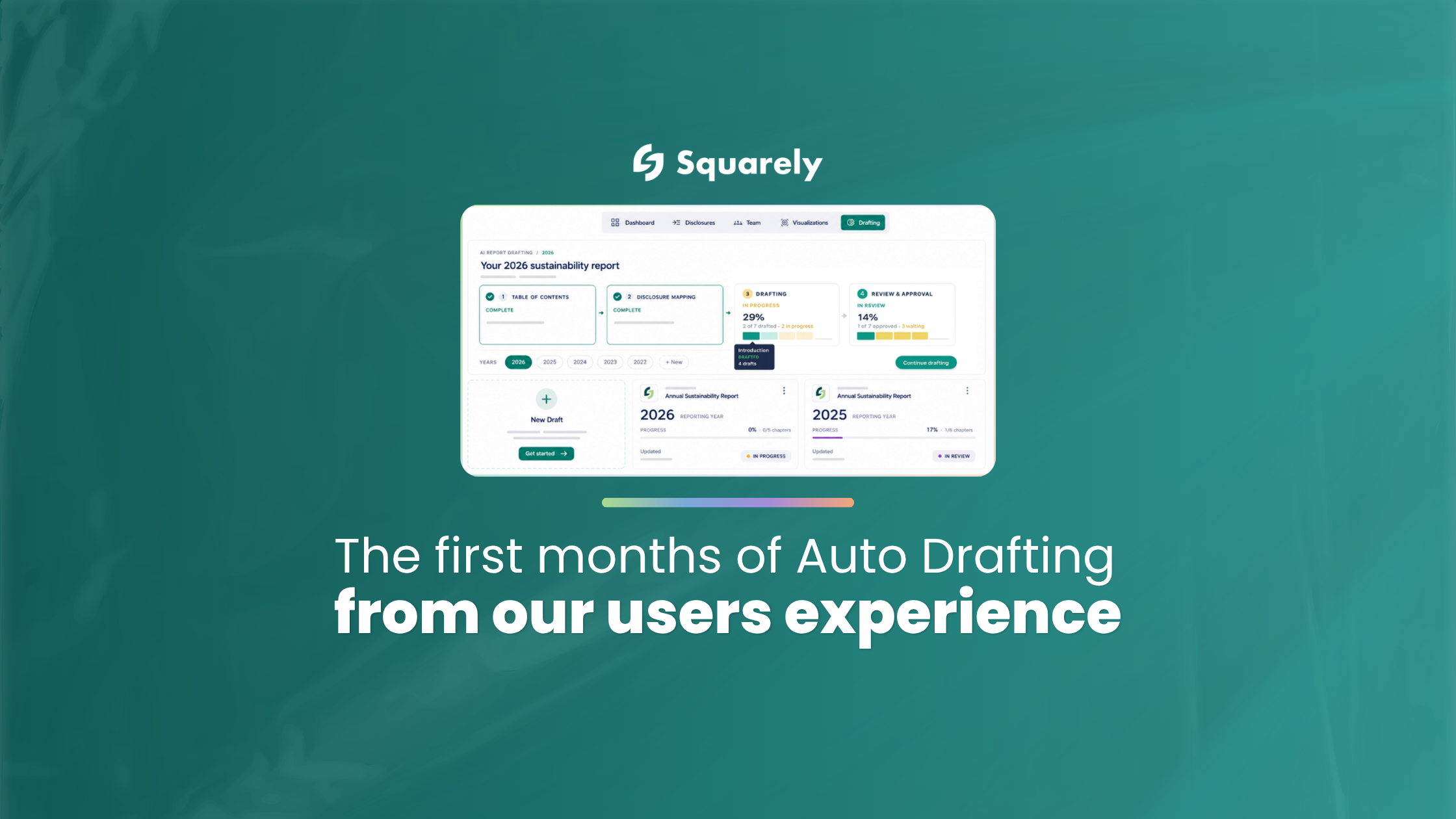
The first months of Auto Drafting, from the experience of our users.
Your 2025 report is finally filed, and you are now entering the early stages of the upcoming cycle. The first draft of your next report is already being decided by the data your team is recording.
We had a conversation with a group of sustainability consultants who support client organisations across the GCC and MEA. All of them run their projects in the Squarely platform. What follows is a synthesis of the conversation, and the direct experience of a Squarely user engaging with Auto Drafting, our automated report drafting module looks like.
A first draft they would send to their clients
We started by talking about trust instead of speed, exploring how much of a first draft would the consultant stand behind and be ready to send to a client.
One user put readiness at around 70%, with the remaining 30% covering their own review, the data checks and the nuance a report needs before anyone reads it, with another consultant pointing to the same conclusion. With that, sending the draft to a client is comfortable.
Both these perspectives came from ESG experts who write sustainability reports for multiple clients, in their own usage experience and perspective.
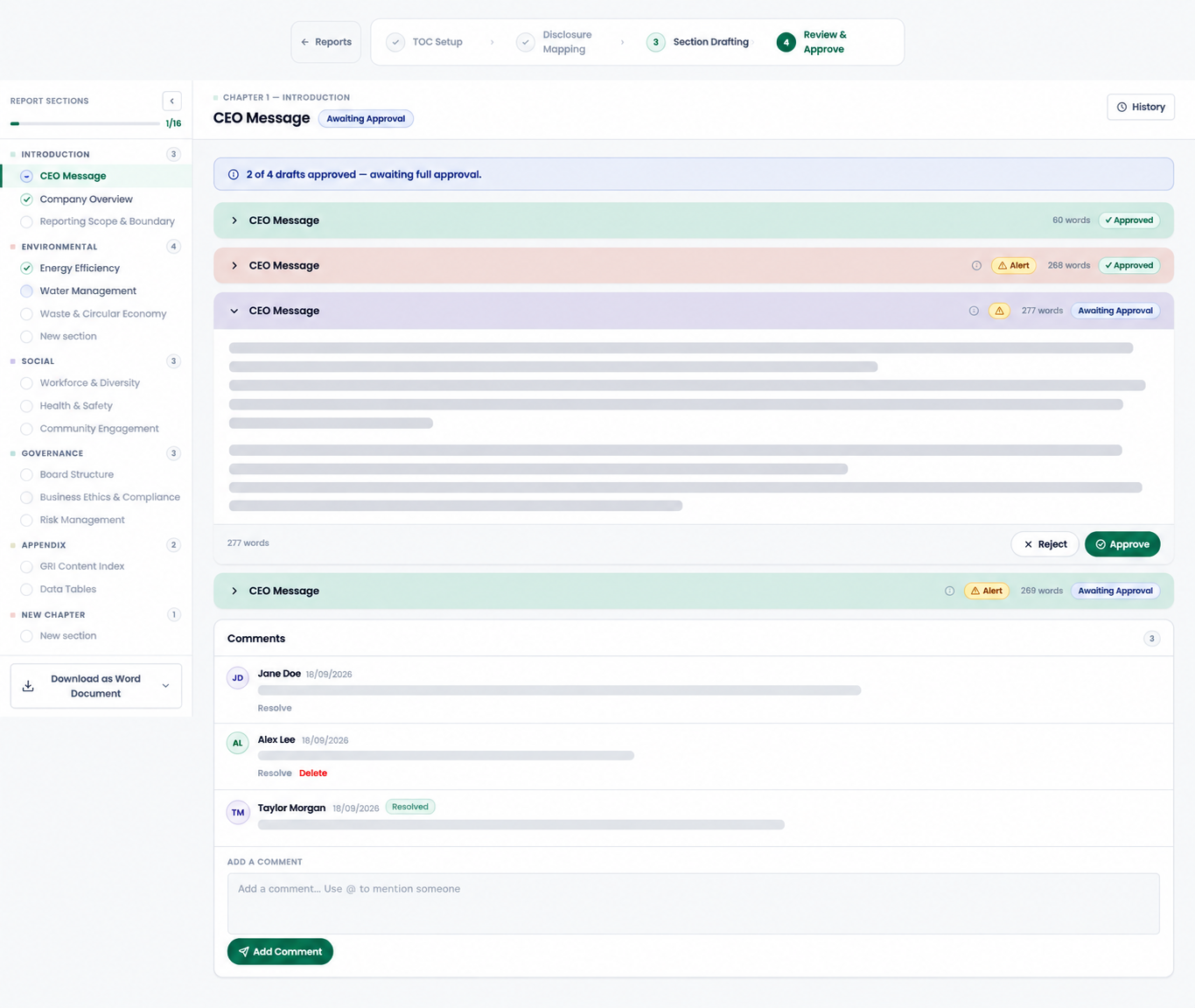
Auto Drafting, Squarely’s automated report drafting module, writes only from disclosures your team has approved, and lists them behind every section. Nothing incorporates the draft without a person approving it, leaving the judgement and important decisions up to you and the relevant people in your team. When the data underneath a saved draft changes, the section flags the update rather than ageing quietly, enabling a traceable spine across the entire drafting process. The same is present across the entire platform, enabling a seamless experience working with long spanning reporting seasons and different stakeholders.
The change they couldn’t stress enough was ownership
On the strongest enhancement they felt once experiencing work with Auto Drafting and the overall Squarely platform, which all its recent improvements, the consultants highlighted the accountability. The visibility of the data, along with the clear ownership, creates a sense of accountability around all the stakeholders involved in the report.
One user, drawing on three years of watching the same client organisations, put the difference down to visibility. Problems and data issues used to stay hidden inside a spreadsheet, while in a structured system with named owners and approval steps, the same problems surface, and someone must answer for them. More structure produces more accountability, and a stronger urgency with the deadlines embedded in the platform.
Prior year figures sitting beside the current entry do most of the work. The example given was if there is a jump from 50,000 kilowatt hours to 350,000, a client now asks themselves what happened before anyone else raises the question. They mentioned as well that one client they worked with went further and came back to them with mistakes in an already published report, found by comparing their own figures inside the platform.
Visible data gaps change the conversation in the same direction. Several consultants described clients who stopped defending their numbers and started chasing the stakeholder who owns the missing or misreported ones, utilising as well the in-platform -features of sending surveys and reminders. One described a client who began auditing their own data once it sat in the platform, because the process started feeling official in a way reports done outside never did.
The email volume also decreases, as users described leaving a note or comment against the data itself, inside the platform, where the person who owns the figure resolves the query, instead of opening another thread that everyone would be trying to find a few months later.
The draft inherits your entire process
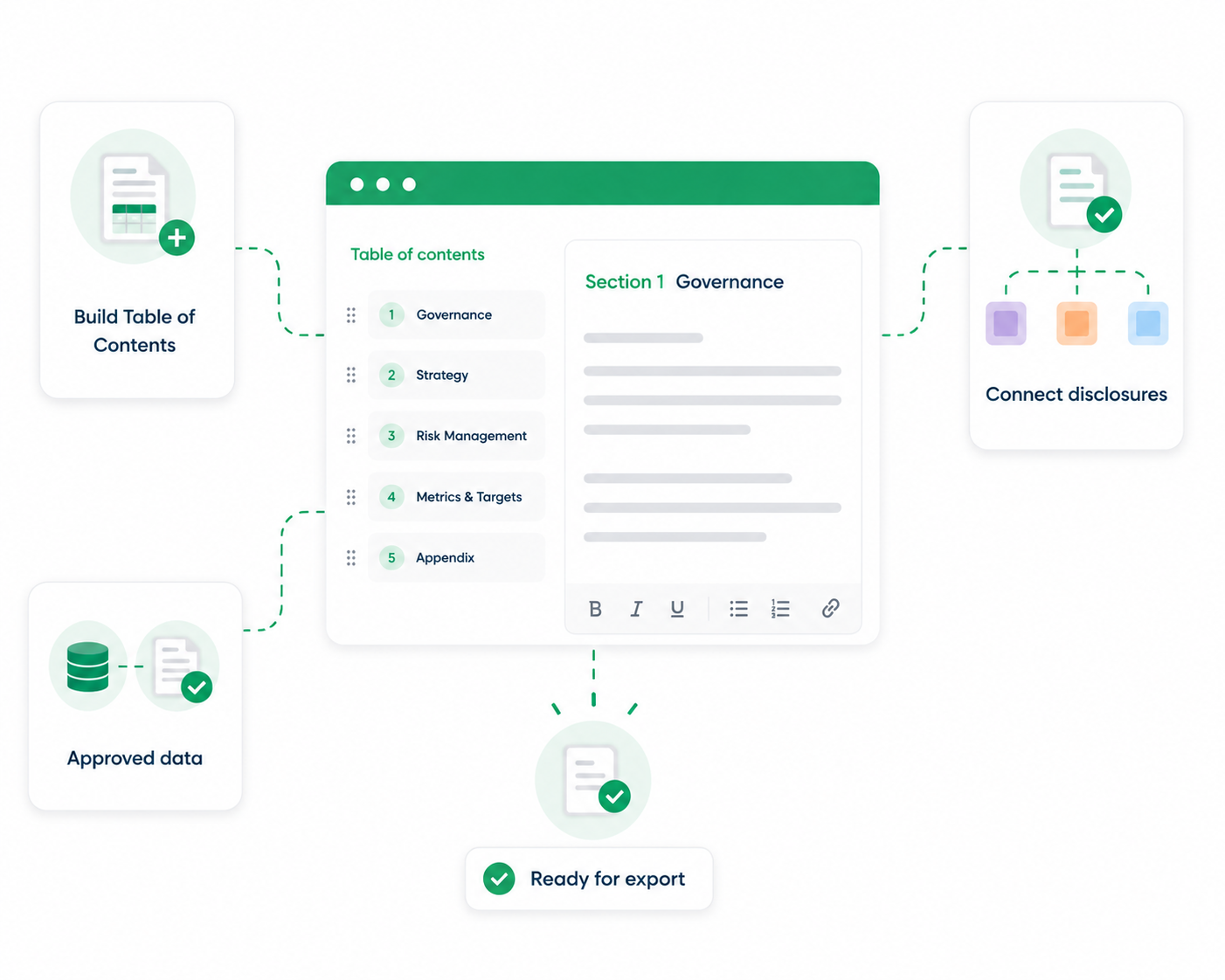
Auto Drafting begins with your report structure, then maps approved disclosures into each section, writing based on your own data, evidence, and context.
The consultants noticed the benefits of auto drafting even more clearly on the people who are new to reporting or sustainability. Someone writing a sustainability report for the first time sees which disclosures fit a topic, selects them, drafts, then removes whatever does not belong and moves the rest. The thinking is guided, especially by the clear structure, while never replaced, and the starting position holds even if the first attempt needs correcting, with a complete history.
The quality of that mapping depends on work done long before drafting. In Squarely, the Plan stage is where you set up your reporting structure, map your disclosures and assign the stakeholders who own each one.
The team module and licenses bring those people into the same system. Surveys, requests and deadlines, reach contributors outside your organisation, suppliers included, without having to give them access to the platform or any other data. One user singled out that last point as a small addition with a large effect on how much data arrives without manual entry.
Everything Auto Drafting writes from is decided in those stages, months before a draft exists.
Time saved is a happy side effect more than the main highlight.
The consultants mentioned working faster, but they didn’t lead with that point. They started by highlighting less chasing, fewer rounds of email, and no reconstruction of last year’s numbers from a folder of spreadsheets.
The reporting season they described starts in the early season, not only by the time the regulatory deadlines approach. Companies who set up in Squarely now reach drafting with approved data, named owners and evidence behind every figure, obtained overtime and naturally throughout the year, rather than rush collected by the end.
What's next?
More Squarely releases will land in the platform across the next months.
If you want to know more, explore our website or reach out to our team.
Set your cycle up in Squarely now and manage your data from day one, so your first draft at the end of it takes days instead of months.
Start your cycle ahead. Book a demo at squarely.tech/demo.
Squarely is an ESG data collection, management and reporting platform, developed by Sustainable Square, built for organisations across the GCC and MEA.